Pages

Saturday, September 10, 2011

Bicyclist nearly got hit on Norbeck Road at dusk

Drivers:  beware of bicyclists!


On Friday night, September 9, 2011, my mother was driving home from class in the light rain and fog.  She had just turned onto Norbeck Road from Wintergate Crossing and was headed uphill in the direction of Layhill Road.  It was dark with no oncoming traffic to illuminate the street.  Foggy conditions made it impossible to see more than a few feet ahead.

Since there was no oncoming traffic, she turned on her brights and was stunned to see a bicyclist directly in front of her!  The bicyclist was riding without a helmet, headlights, or taillights.  He wore dark clothing and was completely invisible in the darkness.

Since Norbeck Road has no shoulders or bike paths, the bicyclist had no choice but to risk his life by riding in the road, directly in the path of my mother's car.  Grateful that there was no oncoming traffic, she swerved to avoid him.  But she was clearly shaken (but not stirred) by the close call.

This situation exemplifies the dangers that pedestrians, bicyclists, and drivers face when traveling on Norbeck Road.  There is simply no room for error, especially during inclement weather and/or poor visibility conditions.

How much longer will it be before someone is injured or worse?

Friday, September 9, 2011

Washington Post published article about increasing numbers of Americans who don't have a car

The Washington Post wrote about people who are car-less
The Washington Post recently published an article titled "Is it a problem that so many Americans don't have cars?" 

The article by Brad Plumer explored why increasing numbers of Americans do not have cars and rely heavily on public transportation to get around, especially to their jobs.  I gather that they also do a lot of walking and biking as well.

According to the article, large numbers of people cannot drive because of age, disability, income, and/or personal choice.  Unfortunately, many of them do not have access to transit options, which suggests that there are significant gaps in metro transit systems. That makes it more difficult for people to find jobs when they cannot even get there in the first place.

Not only do we need to improve and expand public transportation, but we also need to improve pedestrian and bicycle facilities so that people can walk and bike safely to reach bus stops, rail stations, schools, and job centers.  For these reasons, we need to provide equal access to roads such as Norbeck that lack sidewalks and bike paths.

Fixing the situation on Norbeck Road would certainly improve the area's economic independence, social connectivity, human mobility, and overall safety. 

Plus, the ability to travel safely by foot and bike would result in fewer cars on the road, hence better traffic flow.  It's a win-win for everyone. 
Full article available after the jump:

Thursday, September 8, 2011

Actress Reese Witherspoon hit by car while jogging!

The famous actress got hit by a car while jogging
On Wednesday, September 7, 2011, in Santa Monica, California, a well-known woman jogging got hit by a car.  That woman was Oscar-winning actress Reese Witherspoon who was jogging on a sidewalk near her home.  She got hit while crossing a traffic intersection in an unmarked crosswalk. 

A driver of a 1985 Toyota failed to stop and yield to Ms. Witherspoon who had the right-of-the-way.  Ms. Witherspoon suffered minor injuries and was transported to a nearby hospital where she received treatment and was released shortly afterwards with a noticeable gash on her forehead.

Ms. Witherspoon has declined to press charges against the driver of the striking vehicle.  However, the Santa Monica Police cited the driver for failure to stop for a pedestrian and ordered her to retake the driving exam.

If a famous actress can get hit by a car while walking or jogging, then this could happen to anyone, including your children, spouse, neighbors, co-workers, etc. 

This is why we need pedestrian-bike paths on Norbeck Road since most vehicles travel at a higher average speed of 40-55 mph, especially on downhill sections, compared with Ms. Witherspoon's street where the speed limit is much lower at 25 mph.  

That could be why Ms. Witherspoon sustained only moderate injuries and walked away largely unscathed.  If the striking vehicle had been traveling faster, Ms. Witherspoon's life could have been in peril.

I implore the Maryland State Highway Administration (SHA) to focus more on pedestrian safety and add pedestrian-bike paths to narrow, curvy roads, especially when they are repaved or re-routed as was the case during ICC construction with a new bridge overpass.  I also urge SHA to clearly mark and paint crosswalks at all intersections, all four sides, regardless of the location and volume of traffic.  These steps would certainly improve roadway safety for both pedestrians and drivers. 

The SHA needs to start providing equal access to all roadways for our large population of residents who cannot drive.  That includes children, teenagers, young adults, elderly, and the disabled.  Don't forget those who are low-income and may not be able to afford a car and its long-term operating expenses. 

In summary, pedestrians and bicyclists are our most vulnerable road users, therefore, they deserve to be protected at all costs from vehicular traffic with separate pedestrian-bike paths so that they do not have to risk their lives by walking or biking in the road.  This would also reduce vehicle accidents as drivers would not have to swerve around pedestrians in the road or cross the double-yellow line to pass them. 

Please call SHA's Jeremy Beck at 410-545-8518 and demand that SHA upgrade Norbeck Road with a pedestrian-bike path before a pedestrian or bicyclist gets hit and injured or killed.

Full details on Reese Witherspoon's injuries after the jump:

Wednesday, September 7, 2011

Emory Lane in Olney is exactly like Norbeck Road, except it has a pedestrian-bike path

No shoulders on Emory Lane - just like Norbeck Rd
Are you familiar with Emory Lane in Olney?  It’s a narrow two-lane country road that connects Georgia Avenue (at the intersection of the Olney Swim Center) to Muncaster Mill Road. 

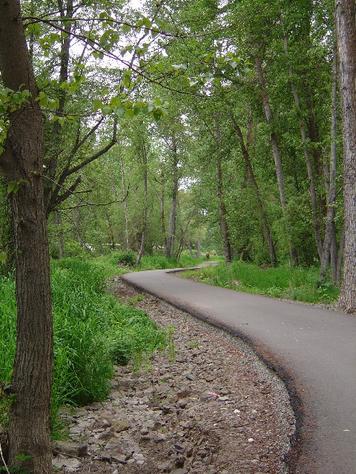
Emory Lane is exactly like Norbeck Road and Layhill Road with no shoulders and blind curves and hilly sections.  But there is one exception – it has a fantastic ped-bike path, that was added recently around 2003 or so due to concerns about safety of children, pedestrians, bicyclists, etc.    

Over the Labor Day holiday weekend, I jogged on Norbeck Road, dodging passing vehicles, to reach the recently completed ICC bike trail at Wintergate Crossing.  Then I headed on the bike-trail along the ICC toward Olney.  Reached Emory Lane at the Georgia Avenue intersection and walked the entire length of Emory Lane to Muncaster Mill and back, snapping off hundreds of pictures. 

Encountered many residents walking, jogging, biking, pushing baby-strollers, walking dogs, and children visiting their friends, etc.  They all looked so happy, healthy, connected, and SAFE from passing vehicles.

I wish we had this path on both Norbeck Road and Layhill Road.  If that ever becomes a reality, then our neighborhoods on Norbeck and Layhill Road would be so much healthier, vibrant, and less isolated. 

I recall this path was built recently between 2000 and 2003 or so.  Do you know who was responsible for getting this  path built on Emory Lane?  I’d love to know. 

Thoughts?  More pictures of Emory Lane available after the jump:

Monday, September 5, 2011

Today's cars are much heavier and faster

1989 Honda Accord hit a pedestrian in Baltimore, MD
Getting hit by a vehicle while trying to walk or bike on the road is no laughing matter.  Most vehicles today have gained hundreds of pounds compared with their predecessors. 

For example, take the Honda Accord, one of the most popular cars in the country for the last 25 years.

As shown in the picture, a 1989 Honda Accord hit a college student who was trying to cross a street in Baltimore, Maryland.  The collision occurred in 1997.  Fortunately, the college student survived the impact with only broken bones while the Accord sustained a shattered windshield.

Back then, a 1989 Honda Accord weighed at or less than 2,600 pounds.  In those days, mid-size family cars were much smaller and featherweights.  Today, a 2011 Honda Accord is a goliath in comparison with its classification as a full-size sedan, tipping the scales at a whopping 3,600 pounds.  However, keep in mind that many families have switched from mid-size cars to more versatile SUVs and crossover vehicles, which  typically weigh an average of 4,000 pounds to 5,000 pounds. 

The additional girth of today's Honda Accord and all other new vehicles are reflected in their much stiffer and stronger body structures with multiple airbags, stability control, front and rear crumple zones, side-impact beams, thicker padding, powerful brakes, navigation systems, optional all-wheel-drive, etc.  That's great for drivers and their passengers.  They have an excellent chance of surviving almost any crash imaginable thanks to the safety improvements. 

Unfortunately, for pedestrians and bicyclists, they have no protection while out traveling on the road.  So it is important that State and County DOTs provide separate and dedicated sidewalks and bike paths on every road to allow children, teenagers, young adults, senior adults, and those with disabilities to walk and bike safely to their destinations.

Ensuring the safety of pedestrians and bicyclists will also improve road safety for drivers as well.  Everyone benefits!

Agree or disagree.  I welcome your opinion.  Please leave comments below or e-mail me at norbeckroad@gmail.com

Friday, September 2, 2011

I met with Secretary Ray LaHood today!

Secretary Ray LaHood heard concerns about Norbeck Road
Great news.  I just returned to my office from a very productive lunch meeting with U.S. DOT Secretary Ray LaHood.  I did not waste any time expressing my concerns about the pedestrian safety problems on Norbeck Road. 

I explained that Norbeck Road is very narrow and curvy with no shoulders, no sidewalks, and no bike paths, all of which creates very dangerous travel conditions for drivers, pedestrians, and bicyclists.

I showed the Secretary several pictures I snapped while walking and driving on Norbeck Road and he agreed that it would be dangerous for anyone to walk and bike in the road, let alone drive and have to swerve around pedestrians and bicyclists.  The Secretary said that the Maryland State Highway Administration (SHA) like all other State DOTs should always include pedestrian and bicycle facilities during the planning of new road and bridges.

I then showed Secretary LaHood a picture of the new bridge that SHA built on Norbeck Road over the Intercounty Connecctor (ICC).  He was surprised to see that the bridge had been built with no shoulders, no sidewalks, or bike lanes.  I explained that SHA had built the bridge without any pedestrian and bicycle facilities because the rest of Norbeck Road did not have them in the first place.  But that shouldn't be an excuse.  Instead, SHA should have anticipated that Norbeck Road would be upgraded in the future with pedestrian and bicycle facilities and built the bridge accordingly. 

I was recently informed that SHA will stripe a bike lane on one side of the bridge, but at a later date in 2012 when the exit/entrance ramps to the ICC are removed.  That's not good enough.  The SHA should have built the bridge with sidewalks on both sides and bike lanes on both sides.  That would have improved connectivity and provided equitable transportation access for those who are car-less and depend on non-motorized travel to get around.

The SHA needs to improve its transportation planning policies and always incorporate pedestrian and bicycle facilities.  Doing so would  be more efficient and reduce labor/material costs upfront by avoiding costly retrofits in the future.

Anyway, the Secretary said that he would be interested in opening a dialogue with SHA to see if anything can be done to address the lack of pedestrian/bicycle facilities on Norbeck Road and on the new bridge over the ICC.  The Secretary's correspondence specialist met with me afterwards and I gave him a two-page letter describing the problems on Norbeck Road along with six full-color pictures of the road's dangerous conditions. 

It appears that the Secretary's office will send a letter to SHA about Norbeck Road.  Yay!  It feels so good to be heard, especially after the disappointing responses from SHA.

The Secretary wants to meet again in 2-3 months to see if anything else needs to be done.  I will also meet with the Secretary's correspondence specialist next week.  And I'm hoping to meet with FHWA staff as that Agency was a partner in funding and planning the ICC. 

Stay tuned for an update.  In the meantime, check out the pictures I showed Secretary LaHood after the jump:

Thursday, September 1, 2011

Two people spotted walking on Norbeck Road

Not Norbeck Rd here, but where's the pedestrian path?
My mom just e-mailed me to say that she saw two people walking on Norbeck Road this afternoon 09/01/2011 during the lunch-hour.  

My mom wanted to whip out her iPhone and take pictures and film them as they walked on the road toward their destination.  But there were no shoulders or safety zones for her to pull over safely so she had to keep on driving.  

According to her, the pedestrians she saw on Norbeck Road were two (2) different people trudging up Norbeck both in places where there was not an extra inch of room for safety.  These people would have appreciated a dedicated and separate pedestrian/bike path so they could travel on foot safely and without worry of getting hit by a passing vehicle.  Please call Jeremy Beck of the Maryland State Highway Administration (SHA) at 410-545-8518 and demand that SHA upgrade Norbeck Road with a pedestrian/bike path before a pedestrian or bicyclist gets hit and injured or killed.  Also, the presence of pedestrians and bicyclists on Norbeck Road forces drivers to slow down or swerve into the oncoming lane, which could cause rear-end accidents and head-on collisions.  It could be your friend, neighbor, or family member driving, walking, or biking on Norbeck Road that gets into an accident.  So pick up that phone and call SHA to demand it take action!   

Readers - have you seen anyone walking, jogging, and biking on Norbeck Road?  If so, please e-mail your observations and descriptions to me at norbeckroad@gmail.com and I will post your sightings on my blog!  Pictures and videos would be great, but not necessary since we have to be very careful when driving on Norbeck Road.

Enjoy the Labor Day Weekend and please drive, bike, and walk safely.  

Tuesday, August 30, 2011

Woman riding bike on Norbeck Road

My mom and I often see people walking, jogging, and biking on Norbeck Road.  I used to do the same when I was a teenager, but after several close calls with passing vehicles, I wisely decided that it was safer to walk and bike thorugh people's front yards, back yards, and on an unpaved wooded goat trail to get to my destinations. 

I've been doing this for the last 14 years while hoping that the Maryland State Highway Administration (SHA) would do something.  Alas, it is almost 2012 and still no safety improvements have been made.  Do we have to wait till 2025, 2030, 2035, before SHA finally does something?  I certainly hope not!   

Often, the pedestrians, joggers, and bicyclists have to jump out onto the grass because cars are passing by too closely and there simply isn't enough room for both vehicles, pedestrians, and bicyclists in the road. 

The SHA could address this safety hazard by widening Norbeck Road with ample shoulders, bike lanes, and a separate pedestrian/bike path. 

Check out these five short clips of a woman riding her bike on Norbeck Road.  I apologize for the amateur quality of these vidoes as we are learning how to use our new iPhones.

Imagine how much more pleasant and safe it would be if this woman could ride her bike on a dedicated and separate pedestrian/bike path and not have to worry about vehicles potentially striking her, not to mention getting whipped around by the wind turbulence of passing vehicles.   


More videos of the woman biking on Norbeck Road available after the jump:

Monday, August 22, 2011

Norbeck Road needs shoulders and a bike path

No shoulders = no room for error on Norbeck Road
I had a chance to take pictures of traffic on Norbeck Road, especially on the dangerous blind curve near Barn Ridge Lane.  It is apparent to any driver, bicyclist, or pedestrian that Norbeck Road is not safe for anyone, including cars.  There are no shoulders or safety zones to allow cars room to swerve or pull off the road in the event of an emergency.  

I received reports from residents that there are many vehicular accidents on this blind curve due to poor sightlines.  There is very little room for error here and that often results in mangled guardrails.  One resident claimed that the Maryland Highway Administration (SHA) has to replace the guardrail every other week.  That's demonstrates the severity of the siutation on this stretch of Norbeck Road.

More importantly, our most vulnerable road users, pedestrians and bicyclists are forced to run and pedal to the max on this stretch just to get through as fast as possible before possibly getting hit by a vehicle.  As a result, drivers must slam on their breaks or swerve around a jogger or bicyclist in the road.  That could cause rear-end collisions or oncoming vehicle collisions.  There is simply not enough room for both vehicles, pedestrian,s and bicyclists to co-exist on this stretch of Norbeck Road.  This is a tragedy waiting to happen. 

But you can make your voice heard by contacting Jeremy Beck, project engineer, at Maryland State Highway Administration.  Urge Mr. Beck and SHA to address the dangerous conditions on Norbeck Road.

Tell Mr. Beck and SHA that not only should Norbeck Road be widened with ample shoulders and curbs to manage water runoff, but it should also have bike lanes and/or a pedestrian/bike path to separate vehicular traffic from foot traffic and bike traffic. 

Implementing these simple roadway features would improve transportation safety and proide room to pull over in case drivers run out of gas, blow a tire, strike an animal, expierience mechanical difficulties, or drift out of their lanes.  Furthermore, pedestrians and bicyclists would be able to pass through this segment of Norbeck Road with a modicum of safety.   

It would also make this blind curve on Norbeck Road near Barnridge Lane less accident-prone and less scary for everyone.  What do you think?

Check out the gallery of pictures showing the dangerous conditions on Norbeck Road after the jump:

Monday, August 15, 2011

I'll be meeting with U.S. DOT Secretary LaHood

Good news!  I am scheduled to meet with Secretary LaHood for lunch on Friday, September 2, 2011.  Here's a briefing that I sent to Secretary LaHood's office prior to our meeting:

Secretary LaHood to hear about Norbeck Road's safety problems

Dear Secretary LaHood,

Thank you for taking the time out of your busy schedule to meet with me to discuss transportation accessibility that affects people with disabilities including the deaf and blind.  As an example, the lack of sidewalks and bike paths makes it very difficult and unsafe for residents get around without car on two roadways near the Intercounty Connector (ICC) in Silver Spring, Maryland.

In 2010, the Maryland State Highway Administration (SHA) began constructing the ICC, with the highway passing under Norbeck and Layhill Roads. That prompted the construction of new bridges on Norbeck Road and Layhill Road.  However, SHA failed to upgrade both roadways in accordance with ADA Guidelines (ADAAG).  This glaring oversight has resulted in significant safety problems for pedestrians and bicyclists in the face of heavier traffic generated by the ICC.

Currently, Norbeck Road and Layhill Road are very narrow and curvy with only one lane in each direction.  Exacerbating the situation, there are no shoulders, no sidewalks, and no bike paths.  Norbeck Road is home to several large neighborhoods including Leisure World and Longmeade Crossing.  Norbeck Road has a newly expanded recreational park and a kiss-and-ride station serviced by WMATA's Metrobuses, Montgomery County Ride-on Buses, and recently, the new ICC Transit Buses.  Neither facilities are accessible by foot or bike.  This needs to be addressed if we are to improve human mobility, connectivity, and safety.  

Letter continues after jump:   

Tuesday, August 9, 2011

Are high tolls on the ICC forcing traffic onto Norbeck Road?

Are the tolls on the Intercounty Connector (ICC) too high?  Could they be forcing traffic onto Norbeck Road?  That appears to be happening according to a recent article in the Washington Post's Examiner newspaper that you can pick up for free at bus stops and metro stations. 

Apparently, Maryland is raising tolls on the Bay Bridge and other roads because gasoline taxes aren't producing enough revenue to cover the $2.6 billion that was spent to build the ICC.

Peter Samuel, editor and publisher of Tollroad News, has taken a close look at the relative costs of building Maryland's Intercounty Connector.

Are ICC's high tolls dumping traffic on Norbeck Road?

On the basis of cost per lane-mile, the ICC came in at $23 million per lane-mile.  Tollroad News has raised  some issues that may prompt the Maryland General Assembly to scrutinize highway projects more carefully in the future.

See the full article after the jump:


Monday, August 1, 2011

Nightmare on Norbeck Road

ICC causing traffic woes on Norbeck Rd
According to an article in the Examiner, the free newspaper that you find at bus stops and metro stations, the Intercounty Connector (ICC) is dumping a large volume of cars and trucks onto Norbeck Road, creating major headaches for residents like Suzanne Corvelli, who lives on Barnridge Lane, a  neighborhood off Norbeck Road.  She has to wait for as long as ten minutes before finally being able to pull out onto Norbeck Road .  My mom has reported the same long wait, especially when making a left turn onto Norbeck Road from her residential street.  The long wait is forcing residents to avoid left turns and only make right turns and detour through some neighborhoods that are connected to Layhill Road such as Drury Road, Tierra Road, Wintergate Crossing, and Norbeck Village. 

The traffic congestion could get worse in 2012 when the ICC's 18 miles of highway are completed.  Fortunately, the entrance and exit ramps at Norbeck Road will be removed sometime in 2012, which means that drivers will only be able to enter/exit the ICC at Georgia Avenue (near Emory Lane) or at Layhill Road (near Park Vista Crossing). 

The eventual removal of the entrance/exit ramps from Norbeck Road could alleviate some of the traffic congestion, but the dire conditions of Norbeck Road with its narrow curvy two lanes and lack of shoulders and pedestrian/bike paths will persist until the Maryland State Highway Administration (SHA) takes action.  State Senator Roger Manno who lives in the affected area between Norbeck and Layhill Road has been pressing SHA to widen the road to four lanes (two lanes in each direction). 

I propose that SHA not only widen Norbeck Road to four lanes, but also include a 25-foot wide grassy median between each direction of traffic to provide a safety zone for cars trying to turn left across traffic.

More importantly, pedestrian/bike paths need to be added on both sides of the road.  This would help improve human mobility, connectivity, and enhance transportation safety.  This would also reduce the number of vehicle miles traveled (VMT) if residents can walk or bike instead of drive.

Readers - do you have ideas for addressing this nightmare on Norbeck Road? 

Article available after the jump:   

Wednesday, July 20, 2011

Did the ICC break its promise to build a full bike path?

Click to expand
Did you have a chance to explore the new ICC bike trail in the past few weeks?  Although not fully complete, several segments are now open to the public, including along Wintergate Crossing and Park Vista Crossing. 

Unfortunately, this ICC bike trail ends at Layhill Road with a long sidewalk detour through a narrow and curvy Bonifant Road.  That sucks for pedestrians and bicyclists who want to avoid surface streets and follow the most direct path through the beautiful woodlands of the Northwest Branch Park as the highway does.   

Why couldn't SHA continue the ICC bike trail along the highway through the meadow and forests in Layhill's Northwest Branch Park to the Piney Branch Park near New Hampshire Road?  This is not the only section gap in the ICC bike trail.  There are also gaps between Lake Needwood and Emory Road.  These gaps are the result of cost concerns and strangely, environmental concerns. 

According to an interview by the Engineering News- Record, Melinda Peters, director of the ICC project,  considers herself to be the public face of the largest, greenest and most controversial highway to be built in decades in metropolitan Washington, D.C.

During the interview, Ms. Peters pointed out that 15 percent of the ICC's budget was devoted to environmental mitigation and enhancements, ranging from streambank protectiona and stormwater management to reforestation and relocation of rare turtles.

That's great, but may we ask what exactly is green about a six-lane highway that cuts through vital wildlife areas, crosses over unspoiled streams and valleys, and eliminated thousands of mature trees during its construction?

Adding insult to injury are the allegations by critics that Ms. Peters and SHA justified the elimination of the ICC bike path by calling it environnmentally unfriendly and costly, while saying that the six-lane highway was good for the environment.

Critics have alleged that Ms. Peters and SHA deceived the bicycle lobby in 2006 by promising a full 18.8-mile bike path along the ICC in return for the lobby's unwavering support of the new highway.  To the dismay of all bicyclists and pedestrians everywhere, Ms. Peters and SHA later broke that promise by eliminating the full bike path to save millions of dollars on a $2.6 billion highway.  Does that sound penny-wise, pound-foolish? 

What say you?  See full details after the jump:

Friday, July 15, 2011

Melinda Peters replied to inquiry about ICC Bike Trail

In February 2011, I had some questions about the ICC bike trail since the ICC Project Website contains no information whatsoever for pedestrians and bicyclists.  Wonder why?  Are they hiding something?

So I wrote an e-mail to Melinda Peters who is the director of the ICC Project.  Imagine my surprise when she replied.  Ms. Peter's e-mail was quite informative, but I still find the ICC bike trail to be a big disappointment.  Here's why:   

In 2006, when plans for the ICC were nearing final stages, the ICC Project promised a full 18.8 mile bike trail running parallel to the ICC.  They proposed the bike trail to gain the support of the very outspoken and powerful bicycle lobby - the Washington Area Bicycle Association (WABA).  Then in 2009 during the economic downturn, the ICC reneged on its promise and eliminated most of the bike trail, save for a few segments here and there. 

It was hack job.  Now under construction, the ICC bike trail has far too many gaps and detours via surface streets to make the trail worthwhile biking.  The problem with detouring to surface streets is that it causes too many disruptions for bicyclists and pedestrians, especially at traffic intersections.  It's not really fair to bicyclists and pedestrians to wait for several minutes at each intersection on surface streets while motorists get to sail along without interruption on the ICC highway.

Simply put, it's no fun biking on surface street sidewalks that are meant for bus-riders and pedestrians, right next to vehicular traffic.  We need a full and separate, continuous bike trail that can be used by bicyclists at very high speeds as well as for joggers, dog-walkers, and roller-bladers who want to enjoy the beauty and serenity of a heavily wooded environment.     

To compromise or cut corners simply defeats the purpose of a bike trail and wastes money as fewer people would use it.  Do it the right way and it'll be more cost effective and generate higher pedestrian and bicycle traffic.  

Apparently, planners in Montgomery County are trying to fill in the gaps.  But wouldn't it have been more cost effective to plan and build the full bike trail in tandem with the ICC highway?  Trying to build (or retrofit) a bike path after the ICC highway has already been built will end up costing the State more money, especially in labor.      

Please share your thoughts?  And please see Ms. Peters' e-mail, which includes the ICC bike trail map after the jump: 

Tuesday, July 5, 2011

Can SHA extend bike path from MD-28 Connector at Layhill through Norbeck to Georgia Avenue?


Bike Path at Llewellyn Manor Way
on Norbeck Road between New Hampshire & Layhill
In 2003, the Maryland State Highway Administration (SHA) built a wide, four-lane connector road on Norbeck Road (MD-28) between Layhill and New Hampshire.  For the geographically-challenged, this connector road now passes by the large mansions in the Llewellyn Manor Way neighborhood and James Blake High School and allows motorists to skip Norwood Road to reach New Hampshire Avenue. 

Anyway, the MD-28 connector road significantly shortened travel times on Norbeck Road and attracted many motorists heading to Baltimore, especially to BWI Airport.  As a result, traffic congestion worsened considerably on Norbeck Road between Georgia Avenue and Layhill Road.  

With this in mind, SHA needs to widen the narrow two-lane stretch of Norbeck Road between Georgia Avenue and Layhill Road to four lanes with ample shoulders and dedicated bike lanes.  In addition, SHA needs to build a pedestrian-bike path, preferably on both sides of Norbeck Road to ensure that residents and children don't have to dash across a busy Norbeck Road to reach the path if they live on the other side.

Besides, a dual bike path is more popular with recreational enthusiasts who love to walk, jog, roller-blade, and bike in loops instead of having to return via the same path they just used.  Yes, that would mean crossing Norbeck Road from one side to the other, but that can be accomplished safely by placing crosswalks at every traffic intersection such as Wintergate Crossing, Leisure World, Georgia Avenue, and Layhill Road.   
 
Widening Norbeck Road to four-lanes could be difficult as the current route is so narrow that it doesn't even have shoulders in most places.  That's very dangerous, not only for motorists who have no room to swerve or pull over in an emergency, but also for pedestrians, and bicyclists.  Unfortunately, the only way to widen Norbeck Road would require the seizure of private properties through eminent domain.  If the ICC was able to do this with hundreds of private properties along the 18.8-mile stretch of the new highway, then SHA should be able to do the same on Norbeck Road between Georgia and Layhill Road. 

The time has come to widen Norbeck Road as it already exceeded its carrying capacity decades ago and the safety issues can no longer be ignored. 

Continuing reading after the jump:

Monday, July 4, 2011

ICC Project Director, Melinda Peters, named one of the top 25 Newsmakers of 2010

Photo Credit:  ENR.com
With the Intercounty Connector (ICC) crisscrossing Montgomery County and adding to the traffic woes on Norbeck Road, did you ever wonder who in the Maryland State Highway Administration (SHA) was responsible for planning and designing the new highway?

Ponder no more!  That person is Melinda Peters who serves as SHA's ICC Project Director and is responsible for coordinating the efforts of three design-build teams and ensuring that the project stays on time and on budget.

In January 2011, Ms. Peters was feted as one of the top 25 news-makers in the construction industry according to The Engineering News-Record, a popular publication in the engineering infrastructure field.  Ms. Peters received this distinction for her leadership on the ICC. 

According to the Project Management Institute (PMI), Ms. Peters graduated from Virginia Tech in 1995 with a Bachelor of Science degree in Civil Engineering, concentrating in Transportation. While in college, Ms. Peters completed an internship with the Federal Highway Administration (FHWA) in the Highway Design, Construction, and Geotechnical departments.  After graduation, Ms. Peters started her employment with the Maryland SHA in the Highway Design Division, and has remained there for eleven years.  During that time, she completed a Masters of Business Administration degree at Mount Saint Mary’s College in 1998, and is licensed as a registered professional engineer in the State of Maryland.

While at SHA, Ms. Peters worked on several projects including the interchange reconfiguration at I-270 and MD-124; the design of the MD-124 Corridor project; and the approximately ten mile US-29 Corridor in Montgomery County, encompassing a total of nine interchanges to the Howard County border.  Ms. Peters' project management experience includes conventional design-bid-build projects as well as design-build.  She has been involved in the on-going planning activities for the ICC project as the Design Liaison and is currently serving as the Project Director for Maryland State Highway Administration on the ICC for design and construction.

Congratulations to Ms. Peters on this award!  Hopefully, Ms. Peters can take advantage of her rising star power and connections in SHA to get a pedestrian-bike path built on Norbeck Road, which has suffered massive traffic congestion since February 2011 when the ICC opened.

Sunday, July 3, 2011

Want to explore this beautiful area by foot or bike?

The Matthew Henson Trail in nearby Layhill
The nation will celebrate its independence on July 4th with fireworks and barbecue gatherings.  

Let's use this occassion to celebrate our independence from automobiles, even for one hour in the day.  But that's an impossible feat for most residents along Norbeck Road since there are no pedestrian-bike paths anywhere.  Instead, residents must get in their cars to drive elsewhere to shop, socialize, entertain, exercise, explore, or even commune with nature.   

Wouldn't it be liberating and convenient to leave your house, walk past your parked car in the driveway, and head straight for a nearby recreational path without having to get in the car to drive elsewhere such as to the wonderful Matthew Henson State Park Trail at Layhill and Middlevale Road? 

Are you fed up with having to get in the car to drive everywhere, even to exercise?  Are you sick of slogging through mud, debris, tall grass, and/or uneven ground next to Norbeck Road.  Are you terrified about getting hit by cars and trucks as you try to travel on foot or bike in the road?  Are you nervous about trespassing or traipsing through people's front yards just to avoid Norbeck Road as I have many times?

Then pick up the phone and call Jeremy Beck, SHA's Project Engineer, at 410-545-8518 or via email at jbeck@sha.state.md.us.  Please leave a message voicing your support and demand for a pedestrian and bike path on Norbeck Road that would ensure the safety, mobility, and fitness of our residents and children for generations to come. 

It's my dream that we and our families can safely stroll on a pedestrian and bike path along Norbeck Road and take great pleasure in the beautiful scenery and wildlife diversity of our heavily wooded area. 

Saturday, July 2, 2011

Would Property Values Go Up if Norbeck Road was More Walkable?

 Could Norbeck Road ever be like this in the future?
If a pedestrian and bike path was built on Norbeck Road, would it enhance property values in nearby neighborhoods?

There's economic proof according to Sarah Gaventa, Director of CABE Space in the U.K.  Her organization conducted a study titled "Does Money Grow on Trees" and found that walkability was shown to increase property values and attract investment.

The CABE developed a scale to rate pedestrian-friendliness called the Pedestrian Environment Rating System (PERS).  For every point on the PERS scale, neighborhoods saw a 5.2 percent increase in residential prices and a 4.9 percent increase in retail rent.  The economic advantages of walkability should convince SHA to spend more time and money on upgrading roads that lack sidewalks and bike paths to make them safer and better connected to neighborhoods, schools, recreational parks, shopping destinations, etc.  .

According to Chris Leinberger, a land-use strategist at the Brookings Institution, the solution is to fill that demand for pedestrian-centric space by transforming outlying areas, primarily suburbs like our Norbeck Road community, into walkable environments.  It's already happened in the Washington D.C. metro area, where 70 percent of walkable areas are outside the city core.

Washington D.C. has the greatest amount of walkable urban places per capita in the country, Leinberger said.  In contrast, New York's metropolitan area, with its car-oriented suburbs and exurbs, comes in at tenth.  By building up these new walkable places, we could jumpstart pedestrian and transit-oriented projects to give a major boost to our recession-weary economy and depressed property values over the next few decades.

Having more walkable places also makes sense on a personal and financial level.  According to Leinberger's data, car-centric suburban households spend anywhere from 25 to 40 percent of their income on transportation, whereas urban households spend only about nine percent.  That extra money can go into savings or to paying off the costs of housing, taxes, schooling, health care, travel, culture, entertainment, and discretionary expenses, all of which would enhance our quality of life.

This is another reason to demand that SHA build a pedestrian-bike path, preferably on both sides of Norbeck Road to ensure maximum safety and connectivity for all pedestrians and bicyclists, including children, teenagers, the elderly, and persons with disabilities who live on both sides of Norbeck Road.

Please call Jeremy Beck at 410-545-8518 (Office) or e-mail him at jbeck@sha.state.md.us to demand that SHA make this pedestrian and bike path on Norbeck Road a reality within the next few years.

Friday, July 1, 2011

$2.6 Billion for the ICC, but nothing for pedestrian safety on Norbeck Road?

Where's the money for non-motorized travel?
If the State can find $2.6 billion to finance the six-lane Intercounty Connector, then why can't it build an 10-foot wide pedestrian-bike path on Norbeck Road?

According to Melinda Peters and Jeremy Beck, there were plans for pedestrian and bicycle facilities along MD 28 (Norbeck Road) between MD-97 (Georgia Avenue) and MD-182 (Layhill Road), as part of SHA’s MD-28/MD-198 Corridor Improvement Study.  This project planning study began in 2002, but was shelved in 2010 during the economic downturn.

Currently, the MD-28/MD-198 pedestrian-bike project is not funded for any activities beyond project planning.  If you are dissatisfied with the State's inaction on pedestrian-bicycle safety and planning in the MD-28/MD-198 Corridor then please pick up the phone or fire up your computer and contact Mr. Jeremy Beck, Project Engineer, SHA at 410-545-8518 or via email at jbeck@sha.state.md.us.

Thursday, June 30, 2011

New bridge on Norbeck Road over the ICC

Where are the shoulders and sidewalks?
Last weekend, I was dismayed (and infuriated) to see that the new bridge on Norbeck Road over the ICC has no sidewalks or bike lanes.  In fact, there is no room at all on the bridge for a pedestrian or bicyclist to travel safely through without the risk of being hit or run over by cars and trucks.

Adding insult to injury is the fact that pedestrians and bicyclists would not be able to jump onto grass should a speeding car come too close as often occurred in the past.  Now, a pedestrian or bicyclist would have to jump over the bridge’s railing and plunge into ICC traffic below.  Death is all but guaranteed.  

Curious to see how a pedestrian or bicyclist would feel trying to cross this new bridge, I took chances with my own life and ran across the bridge, facing traffic, on Saturday afternoon (06/21/2011).  Once was enough.  I didn't wish to replicate it coming back across the bridge with my back to traffic, which would be even more scary.  Suffice to say, it was a frightening experience as I had to occupy the entire left lane and wave at motorists to move over to the right lane so I would have enough room to cross without getting clipped or hit by passing automobiles.  

This is nothing short of poor engineering and a major oversight by the Intercounty Connector (ICC) Project Office so I wrote to the ICC"s John Sales and SHA's Jeremy Beck and expressed my concerns about the dangers of trying to cross this bridge by foot or bike.  

I don't understand why pedestrian and bike safety always appears to be an afterthought during the planning, design, and construction of these roadway projects.  Don't these engineers ever walk and ride bikes?  Would they wish this upon their own children, friends, neighbors, etc?  Sigh.........

Olney Gazette published an article on residents' concerns about Norbeck Road

The Olney Gazette wrote about danger of walking and biking on Norbeck
Although the Maryland State Highway Administration (SHA) and the Intercounty Connector (ICC) Project Office have been responsive to my e-mails about the pedestrian safety issues on Norbeck Road, I wasn't really satisfied with their inaction on this issue. 

I want to raise awareness on the safety problems with Norbeck Road, especially among those who are most affected - residents who live near Norbeck Road. 

I reached out to the Olney Gazette and spoke with its traffic reporter, Ms. Nesa Nourmohammadi, who was more than happy to e-mail back and forth about the issue over two weeks.  

If you would like to share your concerns or feedback with Nesa in the hopes that she'll do a follow-up article, please e-mail her at nnourmohammadi@gazette.net

To my delight, Nesa published an article about Norbeck Road's pedestrian safety problems in the June 28, 2011, edition of the Olney Gazette

A good friend of ours, Diane, who lives near Gaithersburg alerted us to an initial publication of the article in the Gaithersburg Gazette on June 22, 2011. 

I followed up with Nesa by e-mail and learned that the article had been printed by mistake in the Gaithersburg Gazette and would be re-printed with a few corrections in this week's edition of the Olney Gazette.  If you'd like to read it, the full article is available after the jump:

Wednesday, June 29, 2011

Would Norbeck Road be eligible for a Safe Routes to School (SRTS) grant?

Photo Credit:  Transportation for America
Did you know that Maryland is one of 20 jurisdictions nationwide that particpates in the Safe Routes to School (SRTS) program?  It was established in 2006 as a partnership between the Federal Government and States to improve the health and well-being of children by enabling and encouraging them (and their parents) to walk and bike to school. 

The SRTS program examines conditions around schools and conducts projects and activities to improve the safety and accessibility, and reduce traffic and air pollution in the vicinity of schools.  As a result, SRTS programs help make bicycling and walking to school safer and more appealing transportation choices thus encouraging a healthy and active lifestyle from an early age.

The term “Safe Routes to School” was first used in Denmark in the late 1970s as part of a very successful initiative to reduce the number of children killed while walking and bicycling to school.  The SRTS program spread internationally, with programs springing up throughout Europe and in Australia, New Zealand, Canada, and the United States. 

The first modern SRTS program in the U.S. began in 1997 in New York followed by two pilot SRTS programs in 1998, funded by Congress through the U.S. Department of Transportation (U.S. DOT) where I happen to work as a transportation specialist.  The U.S. DOT's National Highway Traffic Safety Administration (NHTSA) issued $50,000 each for SRTS pilot programs in Marin County, California and Arlington, Massachusetts.  The piolot programs were very successful and subsequently copied by other jurisdictions throughout the United States.

Since there are many children and young families that live along Norbeck Road and are serviced by many school buses, it would be wise to build a pedestrian and bike path along the road to ensure the safety of children and their parents as they walk to and from the bus stops, especially during rush-hour traffic in the morning. 

Do you think Norbeck Road would be eligible for a Safe Routes to School (SRTS) grant, especially since it is near James Blake High School, Sandy Springs Day School, Good Counsel High School, and a number of daycare centers? 

Parents, residents, and educators, please share your thoughts and ideas on this SRTS program.

School bus stops on Norbeck Road need to be accessible by a pedestrian and bike path

Yellow sign indicates a school bus stop ahead
While taking pictures of Norbeck Road, I noticed several signs cautioning motorists about school bus stops for children on Norbeck Road. 

If school buses are indeed stopping on Norbeck Road, then it is important for the road to have a pedestrian and bike path so that children and their parents can walk safely to and from the bus stops along Norbeck Road. 

Maybe we should ask our district and county representatives about a Safe Routes to School (SRTS) grant for this stretch of Norbeck Road?  I'm going to look further into the SRTS program and will publish a post with my research and thoughts.  Stay tuned for more details......

As shown in this picture of Norbeck Road, there is a school-bus sign, however, there are no pedestrian or bike paths anywhere.  That's unacceptable when our children's safety and health are at stake

Tuesday, June 28, 2011

Suburbia goes gray with baby boomers

Photo Credit:  Transportation for America
As you may know, Norbeck Road is home to many suburban neighborhoods with increasing numbers of elderly residents.  Did you know that a recent AARP study found that 88 percent of older Americans want to stay in their suburban homes as they age?  Where are those homes?  Unfortunately, most are located in auto-dependent suburbs.

If this poll turns out to be true, then many of those residents who live in suburbia, especially along roads similar to Norbeck will find themselves increasingly isolated as they lose their ability to drive and realize that there are no sidewalks or pedestrian paths to enable non-motorized travel.  Granted, elderly residents may not walk or bike several miles to their destinations, but at least they would enjoy the opportunity to walk several blocks on a dedicated pedestrian-bike path.  This mobility would allow elderly residents to maintain their independence and physical activity, keep up their energy and positive spirits, and continue social interactions with friends and neighbors. 

On a related note, the Washington Post recently published an article titled, "If Baby Boomers Stay in Suburbs, there could be Political and Cultural Ramifications" regarding the rapidly changing demographics of suburbia.  Interestingly, 17 of the 25 states with the highest concentrations of elderly residents are cold-weather states, not the sunny climates of Florida and Arizona, as one would expect. 

In fact, local planners predict that most elderly residents in Washington D.C.'s suburbs will stay put instead of moving to Florida and Arizona.  As a result, local governments will be faced with the daunting task of accommodating an aging population.  In Virginia, Fairfax County has already stepped up to the plate with its "50 Plus Action Plan."  The County is converting all of its pedestrian traffic signals to countdown timers so people can gauge whether they have enough time to cross.

According to a report released by Transportation for America titled, “Aging in Place: Stuck Without Options”:
Absent access to affordable travel options, seniors face isolation, a reduced quality of life and possible economic hardship. A 2004 study found that seniors age 65 and older who no longer drive make 15 percent fewer trips to the doctor, 59 percent fewer trips to shop or eat out, and 65 percent fewer trips to visit friends and family, than drivers of the same age.
The report found that in 2015, just a few short years away, 15.5 million seniors will find themselves without transportation options.  This is another reason why we need to improve pedestrian and bike safety on Norbeck Road to ensure our residents can maintain their independence, physical activity, social interaction, and mobility into their golden years.

Monday, June 27, 2011

Norbeck Kiss-and-Ride Lot needs to be accessible by a pedestrian and bike path

Photo Credit:  The Washington Post
The Norbeck Kiss-and-Ride Lot is now being serviced by three bus lines: 
  1. Montgomery County Ride-On Buses
  2. WMATA Metrobuses
  3. ICC Transit Buses
The ICC Transit Buses are unique from the other bus lines in that they will be traveling up and down our narrow and curvy stretch of Norbeck Road, seven days a week, with 14 daily round trips between Gaithersburg and BWI Airport. 

These enormous buses are making it even more perilous for pedestrians and bicyclists to use Norbeck Road as there are currently no sidewalks and bike paths. 

Wouldn't it be nice if there was a pedestrian path on Norbeck Road that allowed car-less residents to walk or bike over to the Norbeck Kiss-and-Ride Lot where they could catch a ride on a Montgomery County Ride-On bus or a WMATA Metrobus or even the ICC Transit Bus?   

More information about the ICC Transit Bus routes, schedules and fares is posted on MTA's Website at: www.mtaiccbus.com.

Sunday, June 26, 2011

SHA should apply its "Community Improvement" Program to Norbeck Road

Photo Credit:  Transportation for America
I discovered that SHA has a "Community Improvement" program that requires any new or altered roadway project to be planned, designed, and constructed to accommodate person with disabilities. 

If this is true, then why did SHA fail to upgrade Norbeck Road with a pedestrian and bike path.  Furthermore, why did SHA build a new bridge on Norbeck Road without any sidewalks and bike lanes?  Isn't that a violation of ADA? 

If you're concerned abut pedestrian accessibility on Norbeck Road, then please pick up the phone and call SHA's project engineer, Jeremy Beck, at 410-545-8518,to demand a pedestrian and bike path be built on Norbeck Road to ensure the safety and health of pedestrians and bicyclists including children, teenagers, the elderly, and person with disabilities.  After all, it's no fun trying to walk, jog, bike, or ride your motorized scooter in the road, mere inches away from speeding cars and trucks.  It's downright scary and unpleasant. 

More information about SHA's ADA policy is available after the jump.